Sebastian Bühler —
Exhibitions
MEWO Kunsthalle Memmingen



Solo exhibition
curated by Axel Städter
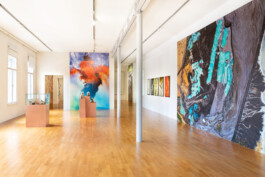
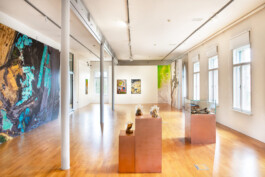
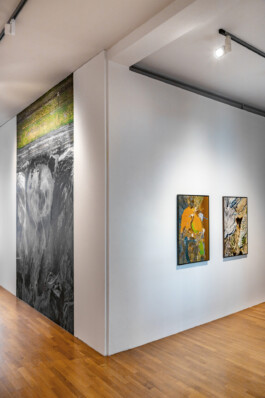
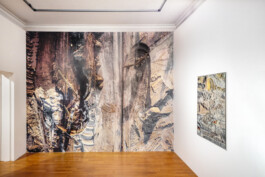
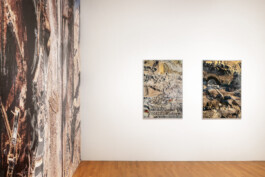
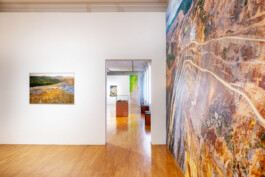
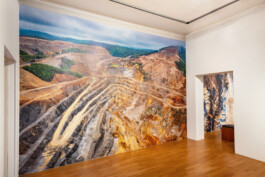
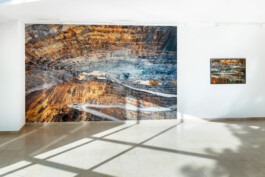
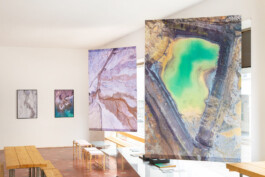
Shots from a bird’s eye view, the camera angle wide, the distance of the drone large – viewers experience a calming distance to the subject, which in turn leads to a largely emotionless view of the matter documented. The motifs shown are deliberately chosen, as are the locations. These are all places where nature has been significantly influenced by man.
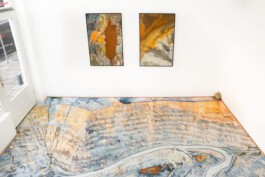
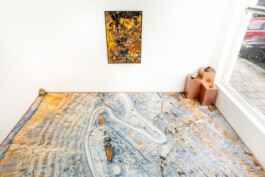
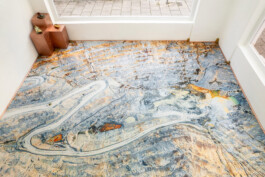
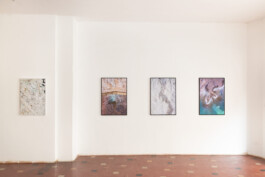
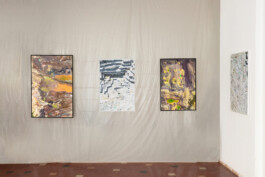
Bühler presents photographs of landscapes in Serbia and Bosnia and Herzegovina that have been shaped by the extraction of natural resources. Layers of soil and delta-like spreading waters – aesthetically pleasing photographs in earthy and engaging hues. Human interventions in nature have left visible traces behind. You can see them in the toxic slag that is discharged into the rivers, creating mesmerizingly beautiful color plays, or in the deep trenches of the open-cast mine, which only reveal their true dimensions in relation to the construction machinery. These images are polarizing and yet exemplary of a system based on the exploitation of nature and people. Underlying all of this is a continuous cycle of economic interests, ecological problems, and human fates in between. This particularly shows in the case of a copper mine in the Serbian town of Bor – which is now under Chinese ownership – where, due to years of exploitation and expansion, entire neighborhoods were lost and relocated.
Humans do not appear as perpetrators or as figures of identification in Bühler’s motifs. Thus, the photography becomes a kind of mirror through which we see ourselves, raising the question of how we should respond to these types of hostile interference with nature. Bühler’s photographs achieve what is inherent in their medium. It is their ambiguity that distinguishes them. They hover on the borderline between documentation and art. Moreover, they intentionally hold the viewers exactly at this borderline, so they can’t solely be interpreted as one or the other. They play with our emotions; on one side, there is the intoxicating beauty of these shots, and on the other, there is the horrific destruction of mother nature.
Axel Städter, MEWO Kunsthalle
See also
Kunstverein Augsburg
Exhibition together with sound artist Jürgen Branz
curated by Christian Thöner
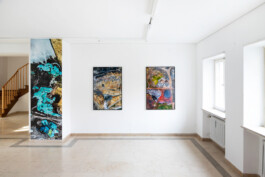
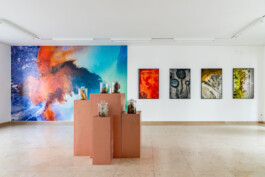
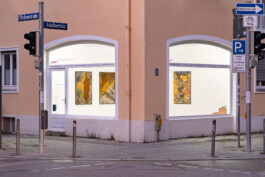
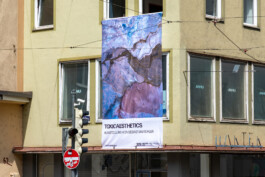
The aesthetic of the works that Sebastian Bühler (*1984) presents in the sixth installment of the exhibition series GROUNDFLOOR PLAYGROUND on the ground floor of the Kunstverein Augsburg is overwhelming. The contrasts of the often luminous colors are striking. The allure of the delicately crafted structures is hard to resist. One loses themselves in them – until it almost becomes overwhelming. For what Bühler lures us with are, upon closer inspection, radiant abstractions of a bitter reality. These are illusions that attract us, only to leave us shattered by what we have ultimately created ourselves: massive destruction of our environment, abandoned debris, and toxic byproducts of industry and energy production that penetrate the earth, water, and air.
Consciously and deliberately, Sebastian Bühler balances on the fine line between art and documentary photography. And more often than not, he crosses territorial boundaries: For GROUNDFLOOR PLAYGROUND #6, he takes us on a journey to Bosnia and Herzegovina and Serbia.
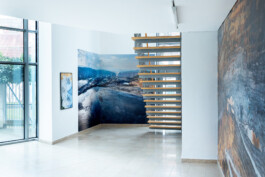
As a creative travel companion, the photographer has chosen sound artist Jürgen Branz (*1985). Using sound recorded at the locations of the photographic motifs, Branz translates the situation Bühler found into an auditory experience in the spaces of the Kunstverein. His compositions, as sound installations, seamlessly integrate Bühler’s large-scale drone photographs and video works into a corresponding sonic world. Can the exhibition created by both artists sharpen the focus on the radical impact we humans and our industry have on the destruction of the environment and living and working spaces, often helplessly and aimlessly? It would be something we all could hope for.
Christian Thöner, Kunstverein Augsburg
See also
super+ CENTERCOURT Galerie Munich
375 Jahre Friedensfest – Augsburg
Asphalt Stories – Augsburg Contemporary
Sebastian Bühler —
Exhibitions
MEWO Kunsthalle Memmingen
Solo exhibition
curated by Axel Städter
Shots from a bird’s eye view, the camera angle wide, the distance of the drone large – viewers experience a calming distance to the subject, which in turn leads to a largely emotionless view of the matter documented. The motifs shown are deliberately chosen, as are the locations. These are all places where nature has been significantly influenced by man.
Bühler presents photographs of landscapes in Serbia and Bosnia and Herzegovina that have been shaped by the extraction of natural resources. Layers of soil and delta-like spreading waters – aesthetically pleasing photographs in earthy and engaging hues. Human interventions in nature have left visible traces behind. You can see them in the toxic slag that is discharged into the rivers, creating mesmerizingly beautiful color plays, or in the deep trenches of the open-cast mine, which only reveal their true dimensions in relation to the construction machinery. These images are polarizing and yet exemplary of a system based on the exploitation of nature and people. Underlying all of this is a continuous cycle of economic interests, ecological problems, and human fates in between. This particularly shows in the case of a copper mine in the Serbian town of Bor – which is now under Chinese ownership – where, due to years of exploitation and expansion, entire neighborhoods were lost and relocated.
Humans do not appear as perpetrators or as figures of identification in Bühler’s motifs. Thus, the photography becomes a kind of mirror through which we see ourselves, raising the question of how we should respond to these types of hostile interference with nature. Bühler’s photographs achieve what is inherent in their medium. It is their ambiguity that distinguishes them. They hover on the borderline between documentation and art. Moreover, they intentionally hold the viewers exactly at this borderline, so they can’t solely be interpreted as one or the other. They play with our emotions; on one side, there is the intoxicating beauty of these shots, and on the other, there is the horrific destruction of mother nature.
Axel Städter, MEWO Kunsthalle
See also
Kunstverein Augsburg
Exhibition together with sound artist Jürgen Branz
curated by Christian Thöner
The aesthetic of the works that Sebastian Bühler (*1984) presents in the sixth installment of the exhibition series GROUNDFLOOR PLAYGROUND on the ground floor of the Kunstverein Augsburg is overwhelming. The contrasts of the often luminous colors are striking. The allure of the delicately crafted structures is hard to resist. One loses themselves in them – until it almost becomes overwhelming. For what Bühler lures us with are, upon closer inspection, radiant abstractions of a bitter reality. These are illusions that attract us, only to leave us shattered by what we have ultimately created ourselves: massive destruction of our environment, abandoned debris, and toxic byproducts of industry and energy production that penetrate the earth, water, and air.
Consciously and deliberately, Sebastian Bühler balances on the fine line between art and documentary photography. And more often than not, he crosses territorial boundaries: For GROUNDFLOOR PLAYGROUND #6, he takes us on a journey to Bosnia and Herzegovina and Serbia.
As a creative travel companion, the photographer has chosen sound artist Jürgen Branz (*1985). Using sound recorded at the locations of the photographic motifs, Branz translates the situation Bühler found into an auditory experience in the spaces of the Kunstverein. His compositions, as sound installations, seamlessly integrate Bühler’s large-scale drone photographs and video works into a corresponding sonic world. Can the exhibition created by both artists sharpen the focus on the radical impact we humans and our industry have on the destruction of the environment and living and working spaces, often helplessly and aimlessly? It would be something we all could hope for.
Christian Thöner, Kunstverein Augsburg
See also
super+ CENTERCOURT Galerie Munich
375 Jahre Friedensfest – Augsburg
Asphalt Stories – Augsburg Contemporary