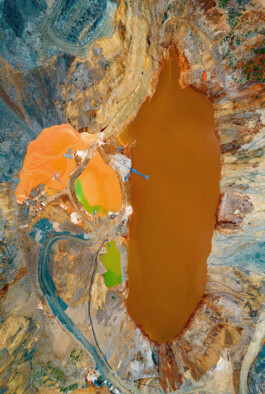
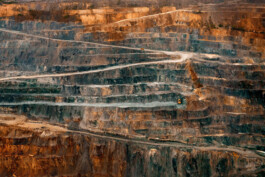
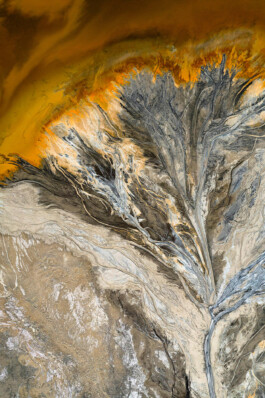
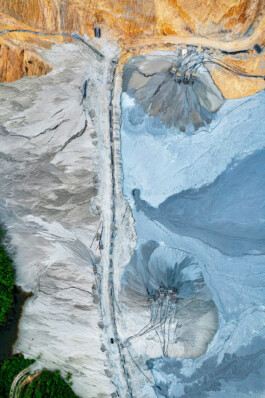
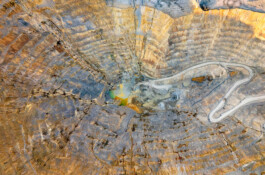
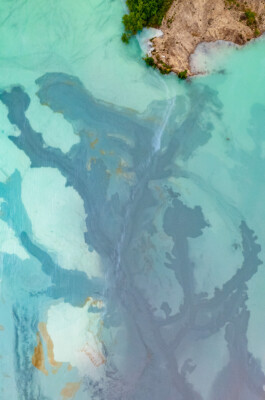
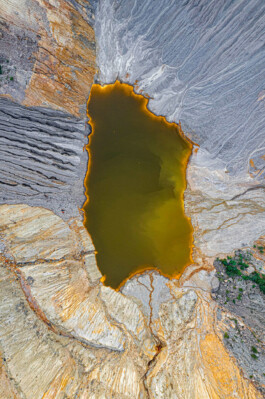
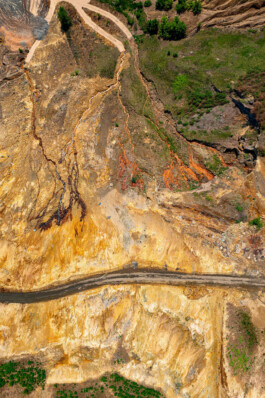
The photos of Sebastian Bühler taken in Bor, northeastern Serbia, may seem as they were stills from a post-apocalyptic sci-fi movie. Serpentines on the hills, formed by tailings, and lakes with contrasting colors, the dominant color is muddy red, in contrast to copper mine’s otherworldly blues, fetid pools of water that amass in feverishly red soil, point to the ecological disaster that has been going on for decades in this town.
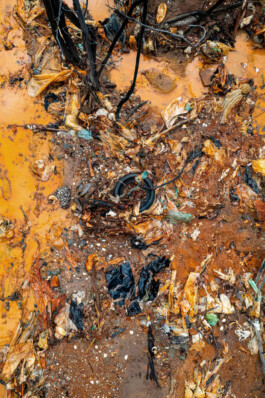
The aesthetic effect of Sebastian Bühler’s motifs thus become an instrument and tool for drawing attention to the landscape, which has been battered by industry and man. The environment filled with garbage and waste from copper mining suggests that people might live nearby.
Shots of bare trees, which seem to be swaying in the wind, and muddy red ground, bring memories of the smell of the sulfur in the air – memories I often associate with growing up in Bor. The irony here is that almost 100 years ago the first ecological protest in Europe took place in Bor, due to the rapid pollution of the Borska river and surrounding fields. Even after almost 100 years, not much has been done in terms of ecological sustainability, formerly state operated and recently Chinese owned copper mine is leaving households, and even an entire village in Bor area displaced.
At first, it feels too easy to have a public opinion about the horrors and environmental destruction that are a consequence of the mining process. The common aspect in almost all Bühler’s photographs, having no people in them, brings a stark relief against the environmental elements, emphasizing nature’s indifference, but makes us wonder whether this is an exploitation of nature or expulsion of humankind.
The picture of everyday life in Bor consists mainly of fatigue, mechanically organized routine, hard labor, sickness, vague and divided emotions, all laid out upon landscapes with serpentines on tailings, reminding us that we are only here temporarily, to earn and survive.
Katarina Kostandinović, art historian from Belgrade, born in Bor (Serbia).


The photos of Sebastian Bühler taken in Bor, northeastern Serbia, may seem as they were stills from a post-apocalyptic sci-fi movie. Serpentines on the hills, formed by tailings, and lakes with contrasting colors, the dominant color is muddy red, in contrast to copper mine’s otherworldly blues, fetid pools of water that amass in feverishly red soil, point to the ecological disaster that has been going on for decades in this town.
The aesthetic effect of Sebastian Bühler’s motifs thus become an instrument and tool for drawing attention to the landscape, which has been battered by industry and man. The environment filled with garbage and waste from copper mining suggests that people might live nearby.
Shots of bare trees, which seem to be swaying in the wind, and muddy red ground, bring memories of the smell of the sulfur in the air – memories I often associate with growing up in Bor. The irony here is that almost 100 years ago the first ecological protest in Europe took place in Bor, due to the rapid pollution of the Borska river and surrounding fields. Even after almost 100 years, not much has been done in terms of ecological sustainability, formerly state operated and recently Chinese owned copper mine is leaving households, and even an entire village in Bor area displaced.
At first, it feels too easy to have a public opinion about the horrors and environmental destruction that are a consequence of the mining process. The common aspect in almost all Bühler’s photographs, having no people in them, brings a stark relief against the environmental elements, emphasizing nature’s indifference, but makes us wonder whether this is an exploitation of nature or expulsion of humankind.
The picture of everyday life in Bor consists mainly of fatigue, mechanically organized routine, hard labor, sickness, vague and divided emotions, all laid out upon landscapes with serpentines on tailings, reminding us that we are only here temporarily, to earn and survive.
Katarina Kostandinović, art historian from Belgrade, born in Bor (Serbia).